
<aside> 💡
The Enlightenment was an intellectual movement that placed great confidence in observation, reason, and the possibility of improving society. Its ideas developed from the scientific changes of the sixteenth and seventeenth centuries and later influenced philosophy, religion, politics, education, and economics.
</aside>
Denis Diderot
The Encyclopédie, published between 1751 and 1772, became one of the defining works of the French Enlightenment. Denis Diderot served as its principal editor. The first edition contained seventeen volumes of text and eleven volumes of illustrations and plates, written by more than 160 contributors.
The work attempted to make fundamental human knowledge accessible. It covered science, philosophy, technology, crafts, and the arts. It praised several Protestant thinkers and challenged traditional religious and political authority. The Holy See1 placed the Encyclopédie on the Index Librorum Prohibitorum2(Index of Forbidden Books), but the work continued to circulate and sold widely across Europe.
1 The Holy See means the office and authority of the Pope, together with the institutions that assist him in governing the Catholic Church.
2 The Index of Forbidden Books was a list of works that Catholics were forbidden to read or possess without permission. Its purpose was to prevent the spread of teachings that Church authorities considered dangerous to Catholic faith or morals.
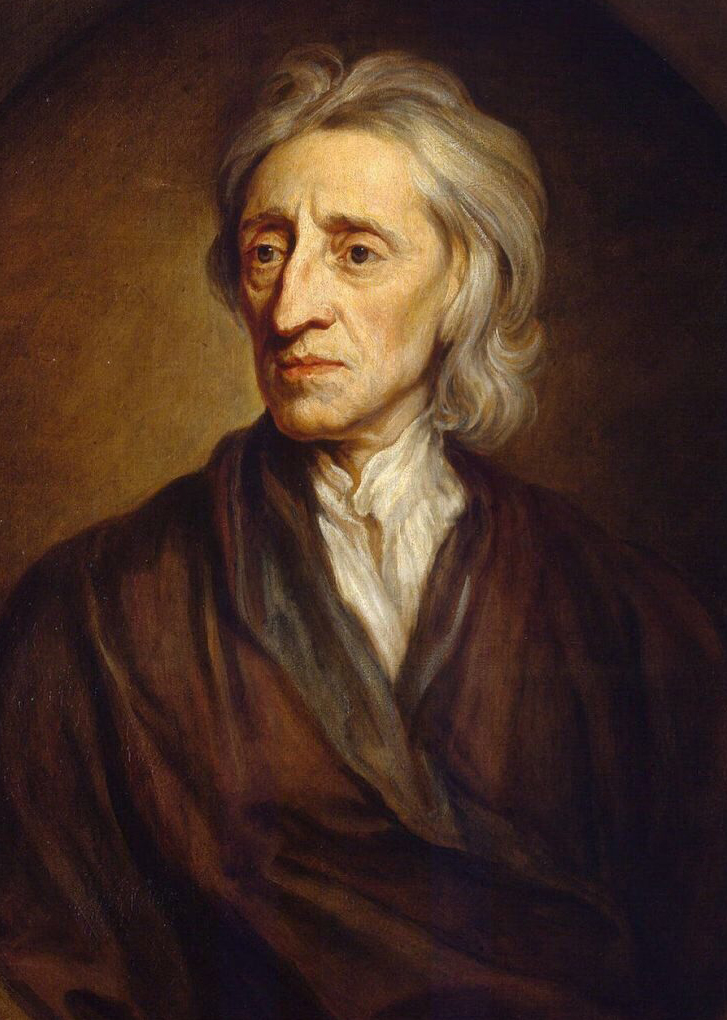
John Locke
Scientific change also transformed philosophy. Enlightenment thinkers believed that human reason could be used to understand the world and improve it. England became an important early center of this style of thought. John Locke applied it to government. He argued that political authority rests on a social contract. Individuals agree to give up part of their natural freedom so that government can protect their rights and civil liberties. A government that fails to provide that protection loses its legitimacy.
Enlightenment political thinkers wanted to rebuild government on new foundations. They challenged absolutism and argued that political authority came from a social contract rather than from birth or divine right. If rulers abused the authority entrusted to them, the people had the right, and in Locke's theory sometimes the duty, to end the agreement and choose new leaders.

Montesquieu
Charles-Louis de Secondat, Baron de Montesquieu, argued that liberty was best protected when government power was divided.
These branches should be separate and should check one another.

Jean-Jacques Rousseau
Jean-Jacques Rousseau criticized the new social order that was developing in eighteenth-century Europe. In his view, wealth had replaced inherited status as society's main measure of a person's importance. Competition for property and status distorted character and morality. He traced many social problems to the loss of equality that followed the state of nature and the establishment of private property. This criticism lies behind the phrase “back to nature”, although Rousseau did not propose a literal return to primitive life.
Rousseau argued that sovereignty belongs to the people. If government does not serve the political community properly, the people may act against it. Citizens should participate in making the laws under which they live, which connects his theory with direct democracy.
The central concept in Rousseau's political thought is the general will. It is the collective will direct toward the common good, not simply the private wishes of individuals and not automatically the preference of a numerical majority. A legitimate law must come from the citizen body and apply generally to everyone. Rousseau therefore treated sovereign authority as indivisible.
Enlightenment thinkers also reconsidered how an economy should work. Many rejected detailed state control of trade and production and instead supported freer competition. They argued that economic development would often be stronger when individuals could make choices and respond to prices without constant government direction.